
Thursday, August 9, 2012

NATIONAL ATHLETIC TRAINERS’ ASSOCIATION RECOMMENDS ATHLETIC HEALTH CARE PROVIDERS ADOPT A “TIME OUT” SYSTEM BEFORE SPORTING EVENTS


Necessary Step to Ensure an Emergency Action Plan is in Place
Contacts:         Robin Waxenberg      
212-489-8006
Ellen Satlof
 972-532-8859
DALLAS, August 1, 2012 – With preseason practices now underway and the start of fall sports schedules around the corner, the National Athletic Trainers’ Association (NATA) issued today an official statement recommending athletic health care providers conduct a “Time Out” before athletic events to ensure emergency action plans are reviewed and in place.

“This is a necessary step that can help save lives and reduce the risk of acute, chronic or fatal outcomes on the playing field,” says statement author Ron Courson, ATC, PT, NREMT-I, CSCS, associate athletic director of sports medicine for the University of Georgia Athletic Association. “Emergency situations can arise at any time during a practice or game. Athletic trainers, sports medicine doctors and other health care providers must provide the best possible care to reduce those risks.”

The new official statement was adapted from a “Time Out” concept developed by Courson,
along with Bert Mandelbaum, MD, and Lawrence J. Lemak, MD.

“Time Out” is a common term both in sports and medicine. Coaches and athletes call time outs to gather a team together and discuss game strategies or to call a play. In medicine, doctors take a time out immediately before every surgery when all operating room participants stop to verify the procedure, patient identity, correct site and side.

Professional sports leagues such as Major League Soccer will use the “Time Out” program this season to test its effectiveness and acceptance of the concept. “This protocol is critical to the immediate care of athletes at any level of sport,” says Mandelbaum, orthopaedic surgeon with Santa Monica (Calif.) Orthopaedic and Sports Medicine Group and the Chan Soon Shiong Sports Science Institute, and me dical director for the World Cup. “This should be a required and universal program.”

“Development and review of an emergency action plan guarantees that a coordinated approach is in place,” adds Lemak, founder of Lemak Sports Medicine & Orthopaedics in Birmingham, Ala., who also serves as medical director of Major League Soccer and is on the medical advisory
board of the National Federation of State High School Associations. “Due to the relatively low incidence rate of catastrophic injuries, we may develop a false sense of security. This is a vital and necessary protocol that protects the athlete and requires the medical team to be prepared under any circumstance.”

Highlights of the official statement include:

1.   Athletic health care providers meet before the start of each practice or competition to review the emergency action plan.

2.   Determine the role and location of each person present (i.e. athletic trainer, emergency medical technician, medical doctor).

3.   Establish how communication will occur (voice commands, radio, hand signals); what is the primary and secondary or back up means of communication.

4.   An ambulance should be present at all high-risk events. The medical staff should know who
is assigned to call for it; if it is on stand-by or required to be on-site; where it is located, what routes it can take to enter and exit the field in the least unencumbered manner.

5.   Ensure that in the event of transport, a hospital has been designated and is the most appropriate facility for the injury or illness.

6.   Review and check/test all emergency equipment available to confirm it is in working order and fully ready for use. For example, make sure all sports medicine team members know where automated external defibrillators are and how to use them.

7.   Consider any issues that could potentially impact the EAP (construction, weather, crowd flow), and plan accordingly and in advance of sports participation.

“These recommendations give players, parents, administrators and team staff peace of mind and ensure that there is a cohesive and immediate plan in place to manage and treat injury,” adds Courson. “It’s a win-win for all involved.”

The following individuals also contributed to the “Time Out” system: Josh Scott, MD; Byron Patterson, MD; Robert Hancock, MD; Glenn Henry, NREMT-P; Ryan McGovern, ATC; Fred Reifsteck, MD; David Sailors, MD; Kim Walpert, MD; Kelly Ward, PA-C, ATC; and Philip Young, ATC, NREMT-B.

An electronic version of the NATA official statement is available at:

About NATA:< /o>
National Athletic Trainers’ Association (NATA) – Health Care for Life & Sport
Athletic trainers are health care professionals who specialize in the prevention, diagnosis, treatment and rehabilitation of injuries and sport-related illnesses. They prevent and treat chronic musculoskeletal injuries from sports, physical and occupational activity, and provide immediate care for acute injuries. Athletic trainers offer a continuum of care that is unparalleled in health care. The National Athletic Trainers' Association represents and supports 35,000 members of the athletic training profession. Visit  www.nata.org

Friday, June 15, 2012

Legislation For CPR Training In High Schools Passes Senate


NewsLI.com
June 14, 2012

“CPR in Schools” Legislation Would Arm Entire Generations of New Yorkers with CPR Training

(Long Island, NY) Senator Jim Alesi today announced that the Senate passed his bill (S.2491) to incorporate basic cardiopulmonary resuscitation (CPR) instruction and use of an automated external defibrillator (AED) into high school physical education or health classes.

“Having performed CPR twice in recent years, I have first-hand experience at how critical it is to start CPR as soon as possible to increase the survival rate of cardiac arrest victims,” said Senator Alesi. “Unquestionably, this legislation will increase awareness and knowledge of this important life-saving technique and provide students with valuable basic training.  As we continue to hear more stories about our state’s young people suffering from sudden cardiac arrest, I cannot think of a better combatant than arming entire generations of New Yorkers with basic CPR skills.”

“If you suffer sudden cardiac arrest, your best chance at survival is receiving bystander CPR until EMTs arrive,” said Dr. Stephen Cook of the Univ ersity of Rochester Medical Center and American Heart Association advocate.  “Eighty percent of out-of-hospital sudden cardiac arrests happen in the home - so the life you save will likely be that of a loved one. We are so thrilled the Senate passed this bill, championed by our own Senator Alesi. CPR saves lives.”

While this legislation does not require students to become certified in CPR, the basic instruction will provide students with the valuable skills necessary to save lives.  Currently, CPR may be offered as a voluntary addition to the health curriculum.  Due to the increased awareness of heart disease and sudden cardiac arrest, CPR instruction can provide students with the knowledge necessary to act in the event of a cardiac emergency.  In 2010, the American Heart Association revised its CPR guidelines to place a greater emphasis on chest compressions – commonly known as the “hands-only” method.  Learning this simpler CPR technique can provide students with the knowledge necessary to save other students’ lives, or the lives of a sibling or parent.

Senator Alesi has been a strong advocate for CPR and AED instruction throughout his tenure in the Legislature.  Recently, Senator Alesi introduced a resolution memorializing Governor Cuomo to proclaim June 1-7, 2012, as CPR and AED Awareness Week in the State of New York – part of National CPR and AED Awareness Month.  Over the past few months, Senator Alesi has attended a number of CPR-related events including: visiting Averill Park High School outside Albany to celebrate the school’s efforts to train more than 1,000 studen ts being trained in CPR in the last three years; hosting the American Heart Association to Albany for its annual advocacy day; and discussing the merits of CPR instruction with members from Mercy Flight Central, an organization Senator Alesi helped to launch a decade ago.  In March of this year, as a first step in leading by example, Senator Alesi and his entire staff became certified in CPR and AED use, having taken an AHA course at the Penfield Community Center.  Continuing his grass-roots advocacy for CPR training, Senator Alesi encouraged the AHA to conduct a training seminar for his colleagues – and various Senate personnel – in Albany prior to the close of the 2012 Legislative Session; the training took place this morning in concert with the Senate’s push to pass Senator Alesi’s CPR in Schools Bill.

Passage of the CPR in Schools bill culminates an incredibly successful, twenty-year career by Senator Alesi as a strong advocate for increasing public awareness of CPR and AED use, and as a steadfast supporter of volunteer emergency service providers.  As a precursor to the CPR in Schools legislation, Senator Alesi championed another similarly significant piece of legislation that has saved lives: a bill in 2006 that requires public facilities with more than 1,000 people to be equipped with an AED and at least one trained employee.  Senator Alesi has also introduced bills to increase volunteerism in local emergency service organizations, such as providing a tuition benefit for volunteer firefighters and ambulance workers, that was negotiated and included in a previous budget, and legislation to reduce costs for volunteer service organizations, including a bill that would have required energy providers to offer services to ambulance organizations at residen tial rates.

The bill will be sent to the Assembly, where it is sponsored by Assemblyman Harvey Weisenberg (D).

Senator Alesi has also been instrumental in securing millions of dollars for dozens of emergency service organizations in Rochester and Monroe County through the years, including Mercy Flight Central and RIT Student Ambulance, one of the few state-credited, all-volunteer student ambulance corps in New York State.  For his efforts on behalf of emergency organizations and volunteers, Senator Alesi has been named an honorary member of most fire departments in the 55th Senate District, and has previously served a member of the Board of Directors for Mercy Flight. Growing up in a family which served with volunteer fire and ambulance companies, Senator Alesi understands how vital these organizations are to New York State.

Recently, Senator Alesi received the inaugural Dr. David Satcher Honorary Community Health Improvement Award from the University of Rochester Medical Center for his unwavering commitment to the Center for Community Health.  Lastly, Senator Alesi is well-known in the State Capitol as the preeminent author of children’s health legislation.  Since joining the Senate, Senator Alesi has sponsored numerous bills aimed at protecting children from dangerous toxins, including legislation that would remove lead and cadmium from toys, novelty items and costume jewelry, and legislation that established a Children’s Environmental Health Advocacy Committee to assist state agenci es and schools in removing toxic cleaning agents from our schools.

Senator Alesi’s bill to prohibit the use of bisphenol-A (BPA) and other phthalates from baby bottles and pacifiers received national attention and has become the model for federal legislation.  Also, Senator Alesi previously introduced “Safe Playground” legislation that eliminated chromate copper arsenate (CCA) from pressure-treated lumber once commonly used for playgrounds.

Sunday, June 10, 2012

Bayport Woman's Life Saved By Emergency Rescue Response


A Bayport woman went into cardiac arrest Wednesday evening while attending an event at the Bayport-Blue Point High School.
The following is a detailed description of the incident and emergency response actions that saved the woman's life from the Community Ambulance Company:
On Wednesday, just after 8 p.m., the Community Ambulance Company was dispatched to a reported “unknown problem” at the Bayport Blue Point High School.
A Community Ambulance unit was already in the town of Bayport, only blocks away from the school, and they immediately began responding to the scene along with an advanced life support provider.
En route to the alarm, the crew was advised by their dispatcher that the patient was in cardiac arrest, and that cardiopulmonary resuscitation (CPR) was being preformed.

Receive updates to this story and other breaking news in your inbox or smartphone by signing up for our newsletter here

Upon arrival, the crew found an adult female in cardiac arrest. Staff of the Bayport Blue Point High School, along with Suffolk County Police Officer Vanessa Logan, had initiated CPR and applied an automated external defibrillator (AED).
A total of three shocks had been delivered to the patient prior to EMS arrival. The Bayport Fire Department was also activated for the alarm and they responded to assist the ambulance crew.
When the ambulance crew arrived at the patient’s side they attached a cardiac monitor and determined the patient was in a shock-able rhythm called ventricular fibrillation, which occurs when the heart is no longer beating, but quivering, and unable to effectively pump blood.
The crew cleared the patient and administered one additional shock, after which a palpable pulse was felt and spontaneous respirations began. The patient was quickly prepared for transport. Her breathing continued to be assisted by members of the crew while advanced life support interventions were performed. These included establishing an intravenous (IV) line and cardiac medications.
The patient continued to improve while en route to Brookhaven Memorial Hospital. Upon arrival at the emergency department the patient had a very strong pulse as well as an audible blood pressure. She continued to become more responsive in the hospital, (so much so that she was unable to tolerate any sort of advanced airway adjunct).
After being stabilized, she was transferred to Stony Brook University Hospital with an extremely positive prognosis. As of Thursday, June 7, the patient was awake, alert, and able to talk to her family. She is expected to make a full recovery.
This patient has a second chance at life thanks to the quick actions of the staff at Bayport Blue Point High School, bystanders, the Suffolk County Police Department, and the Community Ambulance crew.
This situation once again illustrates the importance of CPR training and defibrillator access, two links in the American Heart Association’s “Chain of Survival.” Fortunately for this patient, she was in a facility with several AEDs and personnel well trained in the operation of the equipment.
The patient’s outcome may have been drastically different if staff and bystanders did not jump into action with CPR and defibrillation.  For a patient in cardiac arrest, every minute that passes without CPR or defibrillation, the chances of survival greatly diminish.  The early CPR and defibrillation, coupled with the advanced care provided by the EMS crew of Community Ambulance, have given this patient the opportunity to live on. All those involved should be commended for a job well done.
The crew consisted of Thomas Young-EMT-CC, James MacDonell-EMT, Eric Dulmovits-EMT, Paul Mastronardi-EMT, Holden Schoenig-EMT, Charlie Zigrosser-Driver, Trevor Golub-Youth Squad Member, and Barry Lipsky, Bayport Fire Department EMT. Additional emergency personnel on scene included Police Officer Vanessa Logan and members of the Bayport Fire Department.
Saving another persons life can be an unexpected and rewarding experience. Community Ambulance Company offers FREE CPR and AED training upon request.
The Community Ambulance Company of Sayville has been providing emergency medical services to the residents of Bayport, Bohemia, Oakdale, Sayville and West Sayville for the past 61 years. Made up of primarily volunteers, Community Ambulance Company answered over 4,100 calls for assistance in 2011.
If you are interested in joining and want to help your community, please contact us at (631) 567- 2586. No medical experience is necessary and all training is provided at no cost. You can also find more information and apply for membership by visiting our website at www.communityamb.org.

Wednesday, May 30, 2012

Little League cardiac arrest highlights need for heart screenings


By Dr. Marc Siegel
Published May 29, 2012
FoxNews.com
Description: http://global.fncstatic.com/static/managed/img/fn2/video/052412_an_heartstop_640.jpg

Sean Neely, 12, was playing catcher at a little league game in Freeport, Pennsylvania earlier this month when he was hit in the chest with a foul ball. For almost anyone, this would be just a bruise. But for this boy, the thump to the chest came at exactly the most vulnerable moment in the cardiac cycle, sending his heart into a lethal arrhythmia; probably ventricular fibrillation, where the heart quivers and then stops.

The condition where trauma to the chest causes this to happen is known as commotio cordis. It is very rare, and only 15 percent of people who experience it survive. Luckily for Sean, his two coaches initiated Cardio Pulmonary Resuscitation right away (which preserves about 30 percent of cardiac output), and he came around. He was airlifted to Children's Hospital of Phil adelphia, a top notch facility where he was tested and observed for three days, and was reportedly found to have a normal heart. It was a medical miracle that he suffered no damage from the heart stoppage.

Most people who develop this problem require immediate defibrillation; where electric shocks are administered to the chest to restore a normal beat. There are laws to ensure that automated external defibrillators are available in all fifty states, and good Samaritan laws to protect those who use them. They are easy to use; you put the pads on the chest and the defibrillator does the rest - sensing the rhythm and administering a shock if needed. The American Heart Association estimates that AEDs could save 20,000 lives when they are used promptly.
 
Sean Neely wasn't one of those 20,000 -- the AED wasn't necessary in his case, though one was available on the scene. His heart rhythm returned to normal spontaneously, and the CPR preserved blood flow to Sean's brain and other vital organs until that happened.

Sean's unlucky cardiac arrest wasn't the result of an underlying problem with his heart. Pre-screening by a pediatrician or even a heart specialist could not have predicted this event. Nevertheless, any time a young person sustains a heart attack or arrhythmia while engaging in sports it is a good time to issue a reminder: All teens should see their pediatrician before competing.

I believe these teens should all have at least an EKG as well as a careful physical examination, with special attention paid to their heart sounds and abnormalities on the EKG which might predict an arrhythmia. Any heart murmurs should precipitate an echocardiogram of the heart to make sure there are no problems with the valves or walls of the heart. Any abnormality should immediately be discussed with a cardiologist.

Keep in mind that 100,000 young athletes die of cardiovascular events while participating in sports, which is more than those who die in car accidents. The most common cause is from hypertrophic cardiomyopathy, an abnormal thickening of the wall of the heart that is difficult to diagnose without an echocardiogram.
 
Sean was lucky; he owes a lot to his coaches and to the two nurses who were on the scene. Others aren't as fortunate - we need to keep a special eye out for heart problems as our teens engage in competitive sports. They are too precious to lose.

Marc Siegel MD is an associate professor of medicine and medical director of Doctor Radio at NYU Langone Medical Center. He is a member of the Fox News Medical A Team and author of The Inner Pulse; Unlocking the Secret Code of Sickness and Health.

Thursday, April 26, 2012

Study Supports ECG Screening During Pre-Participation Exam to Identify Athletes at Risk of Sudden Cardiac Death


Released: 4/25/2012 3:30 PM EDT

Source: American Medical Society for Sports Medicine


Newswise — ATLANTA, Ga. – University of Washington researcher Jessie Fudge, MD received the Dr. Harry L. Galanty Young Investigator’s Award for excellence in sports medicine research at the 21st American Medical Society for Sports Medicine Annual Meeting in Atlanta, Ga. on April 24, 2012.


Dr. Fudge’s study “Cardiovascular Screening in Young Athletes : A Prospective Study Comparing the PPE Monograph 4th Edition and Electrocardiogram” looked at the challenging issue of identifying young athletes with undiscovered cardiovascular issues. It concluded that a standardized history and physical yields a high false-positive rate in a young active population and ECG screening is feasible and provides superior sensitivity and specificity.


“ECG screening, when interpreted with modern criteria for youth athletes, provides better sensitivity and specificity compared to current screening guidelines,” said Dr. Fudge. “The addition of ECG screening to the pre-participation exam may better identify athletes at risk for sudden cardiac death.”


A total of 1,339 subjects were screened. Echocardiograms were completed in 586 (44%) for concerning medical history (24%), family history (12%), physical exam (8%), or ECG (5%). Six (0.45%) were identified with a disorder known to cause sudden cardiac death (SCD). The sensitivity and specificity to detect disorders at risk of SCD were respectively 33% and 69% for history alone, 16% and 91% for physical exam, and 100% and 95% for ECG. Fifty percent of disorders known to cause sudden cardiac death were detected by ECG alone.


Co-authors of the research are Jonathan Drezner, MD; Kimberly Harmon, MD; David Owens, MD; Jordan Prutkin, MD, MHS; Irfan Asif, MD; Alison Haruta, Hank Pelto, MD; Ashwin Rao, MD; and Jack Salerno, MD all from the University of Washington


The conference featured lectures and research addressing the most challenging topics in sports medicine today including prevention of sudden death, cardiovascular issues in athletes, concussion, biologic therapies, and other controversies facing the field of sports medicine.


More than 1,200 sports medicine physicians from across the United States and 12 countries throughout the world attended the meeting.


The Galanty Young Investigator’s Award is presented at the AMSSM Annual Meeting for the most outstanding research presentation by a member who is a sports medicine fellow or who has rec ently completed fellowship training. The award was established in 2003 to honor Harry Galanty, MD, a charter member of the AMSSM, who passed away in 1999 at the age of 36. Dr. Galanty’s contributions to sports medicine combined clinical service, and a commitment to teaching and research.


Dr. Fudge is completing a fellowship in primary care sports medicine at the University of Washington. She completed a family medicine residency at UW.


The AMSSM is a multi-disciplinary organization of sports medicine physicians whose members are dedicated to education, research, advocacy, and the care of athletes of all ages. Founded in 1991, the AMSSM is now comprised of more than 2,000 sports me dicine physicians whose goal is to provide a link between the rapidly expanding core of knowledge related to sports medicine and its application to patients in a clinical setting.

Sunday, April 22, 2012

A race against time


One important skill — CPR — was as responsible as any for saving 11-year-old player.
Published 11:11 p.m., Saturday, April 21, 2012
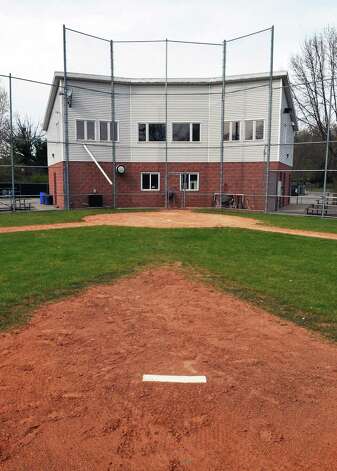
  • View from the pitcher's mound at Cook Park little league "majors" field in Colonie April 18, 2012.   (John Carl D'Annibale / Times Union) Photo: John Carl D'Annibale / 00017305A
    View from the pitcher's mound at Cook Park little league "majors" field in Colonie April 18, 2012. (John Carl D'Annibale / Times Union)


Page 1 of 1
Brian Manion, the co-president of South Colonie Youth Baseball, put $2,000 on his personal credit card Tuesday to buy his league a defibrillator.
"I'm sure they'll figure out how to reimburse me later," he said. "I just thought we needed to do this now."
Goldstock's, the sporting goods store in Scotia, sold out its entire stock of "heart guard" shirts, or padded undershirts marketed to protect children from blows to the chest.
Ditto for Play it Again Sports in Latham.
"Tons!" a sales associate said when asked how many heart guard shirts had been sold since Monday evening, when an 11-year-old Colonie Little League player nearly died at home plate after being hit in the chest with a pitch.
The story had a happy ending. Many don't. In youth leagues areawide, the near tragedy at Cook Park has jolted parents and coaches, sending them scrambling to ensure we don't test the odds again.
That's a good thing — but only so long as we're not misdirecting our energy toward unproven solutions or, worse, begetting fear and hysteria without cause.
What we really need to do is take a deep breath.
Because there is a very easy way to dramatically improve the safety of our playing fields, without spending a dime.
First, a little perspective: Most of us never had heard of commotio cordis before Monday, and that's because it happens only a handful of times each year, affecting a minuscule percentage of the millions who play youth sports.
Of course, that doesn't diminish the consequences for victims' families. Somewhere between 65 and 90 percent of commotio cordis cases end in tragedy. A 12-year-old lacrosse player from Rochester died just this past February.
Commotio cordis happens when a spherical object strikes a specific part of the heart at a precise fraction of a second between beats. The result is cardiac arrest.
But even if we understand what can turn a Little League fastball deadly, we're much less certain about what can make it safe.
Using swine that were placed under anesthesia and then fitted with heart guard shirts, the National Operating Committee on Standards for Athletic Equipment has tested most of the products now flying off the shelves of local sporting good stores.
The results: There's no proof they're effective.
"As a general rule, there's no scientific evidence that any of those products provide less protection or more protection," said Mike Oliver, the NOCSAE's executive director.
More worrisome, the research showed some of the shirts may actually increase the chances of commotio cordis.
How? For reasons that are unclear, balls traveling faster than 40 miles per hour are less likely to cause commotio cordis than those travelling a little slower.
The padding of the heart guard can take a 70-mile-per-hour fastball and soften the blow enough to create the impact of a 35 mph pitch. As counterintuitive as it sounds, the slower pitch may be more dangerous.
"That was a real surprise to us," Oliver said.
There's another problem: Equipping our kids with gear that's of dubious effectiveness could provide false peace of mind.
Just ask Karen Acompora. Her son Louis died in 2000, at age 14, while playing goalie in a Long Island high school lacrosse game.
"I hear parents say, 'Oh, it's fine, my kid is wearing a chest protector," Acompora said.
"Well," she said, "so was mine."
Soon after their son's death, Karen and her husband, John, became champions of legislation that makes it mandatory for every New York public school to have a defibrillator.
That's important, because a defibrillator offers the best chance of restarting the heart of someone who has suffered commotio cordis.
But Louis's Law, as it's known, doesn't cover recreational leagues, and at a cost of $1,200 to $2,000, defibrillators may fall beyond some leagues' means.
Those leagues still can take a major step toward making all their athletes safer, at virtually no cost.
How?
They can make every single one of their coaches learn CPR.
The lesson takes 15 to 20 minutes, and it can be done simply by watching instructional videos on the American Heart Association's YouTube site.
The Colonie Little League player is alive today because of the terrific teamwork executed by the coaches, first responders and emergency crews.
But if Frank Prevratil, the league president, hadn't begun chest compressions right away, and if Colonie police officer Brian Curran hadn't continued CPR when he arrived on scene, the EMS crew equipped with a defibrillator might not have saved the boy's life.
"In most communities, the first responders all carry some form of a defibrillator," said Bob Elling, a Colonie paramedic who serves on the board of the American Heart Association.
"But in order for the defibrillator to be successful, we really need to prime the pump. We need to start CPR immediately."
Elling has been a paramedic for 35 years.
"I've never once — not once — seen a case where someone survived and there wasn't someone who started CPR before we got there," he said.
The American Heart Association is pushing a law that would make it mandatory for all high school students to learn CPR before graduating.
Even if the last thing schools need is another mandate, surely asking every student to spend one class period learning the proper way to perform chest compressions wouldn't be too burdensome.
"You don't need anything special," Elling said. "There's no special equipment. Anybody could teach the class. You go to a website, watch a video demonstration, borrow a mannequin from the local rescue squad and have each student try the compressions.
"That's it. One class period."
We never can create enough rules or pass enough laws or develop enough safety equipment to remove all the danger from sports.
But we all can — and should — invest the 20 minutes it takes to be prepared for the worst. It will save lives. An 11-year-old boy is proof.
piorizzo@timesunion.com • 518-454-5425 • @peteiorizzo


Read more: http://www.timesunion.com/sports/article/A-race-against-time-3500588.php#ixzz1sm8gqtRj
Facebook
Twitter
You Tube
PO Box 767
Northport, NY 11768
Phone: 631-754-1091
iHealthSpot